

Through coaching, mentoring, and experiential learning, the R. James Kelly LEAD Program helps students develop the competencies employers value most
Poll just about any Culverhouse College of Business student and ask them what they plan to do after graduation, and the answer will probably be something along the lines of “putting my degree and education to work in the professional world.” While the curricula attached to a business school’s many degree options impart both fundamental and specialized knowledge, students learn “soft skills” such as collaboration, leadership, and self-awareness through experience, mentorship, and intentional, focused instruction. These are the characteristics that employers seek in new hires: it’s not enough to be smart and technically capable; one also has to get along in the office, resolve conflicts without taking things personally, communicate with clarity, present with confidence, and so on in order to be a valued contributor.
However, employers have found that their new hires are lacking in these areas and unprepared for surviving, let alone thriving, in their jobs.
Culverhouse made a move in 2020 to address this by launching what is now known as the R. James Kelly LEAD program, which empowers undergraduate students to discover their strengths and chart meaningful career paths through immersive workshops and events, one-on-one mentoring, and community engagement projects.
According to Dr. Keely Latopolski, who manages Kelly LEAD as the College’s assistant dean for undergraduate academic programs and retention, the foundational work to begin the program started long before then. “Dean Kay Palan had the vision for a required professional development program from the time she first started as Dean over 10 years ago,” she said.
This program, modeled after a similar initiative at Temple University, was created to address the soft skills gap that industry partners and Culverhouse Board of Visitors members identified among entry-level hires. It also aligned with the College’s need to better track student engagement at scale and meet the Association to Advance Collegiate Schools of Business’ updated 2020 accreditation standards, which placed greater emphasis on professional development.
Kelly LEAD now engages more than 10,000 students across Culverhouse, and its curriculum begins for freshmen with required courses that emphasize resumes and business introductions. Outside the classroom, students participate in executive training, where companies present on various topics related to the program’s soft skills competencies, as well as faculty- and student-led coaching and mentoring sessions that cover concepts introduced in class.
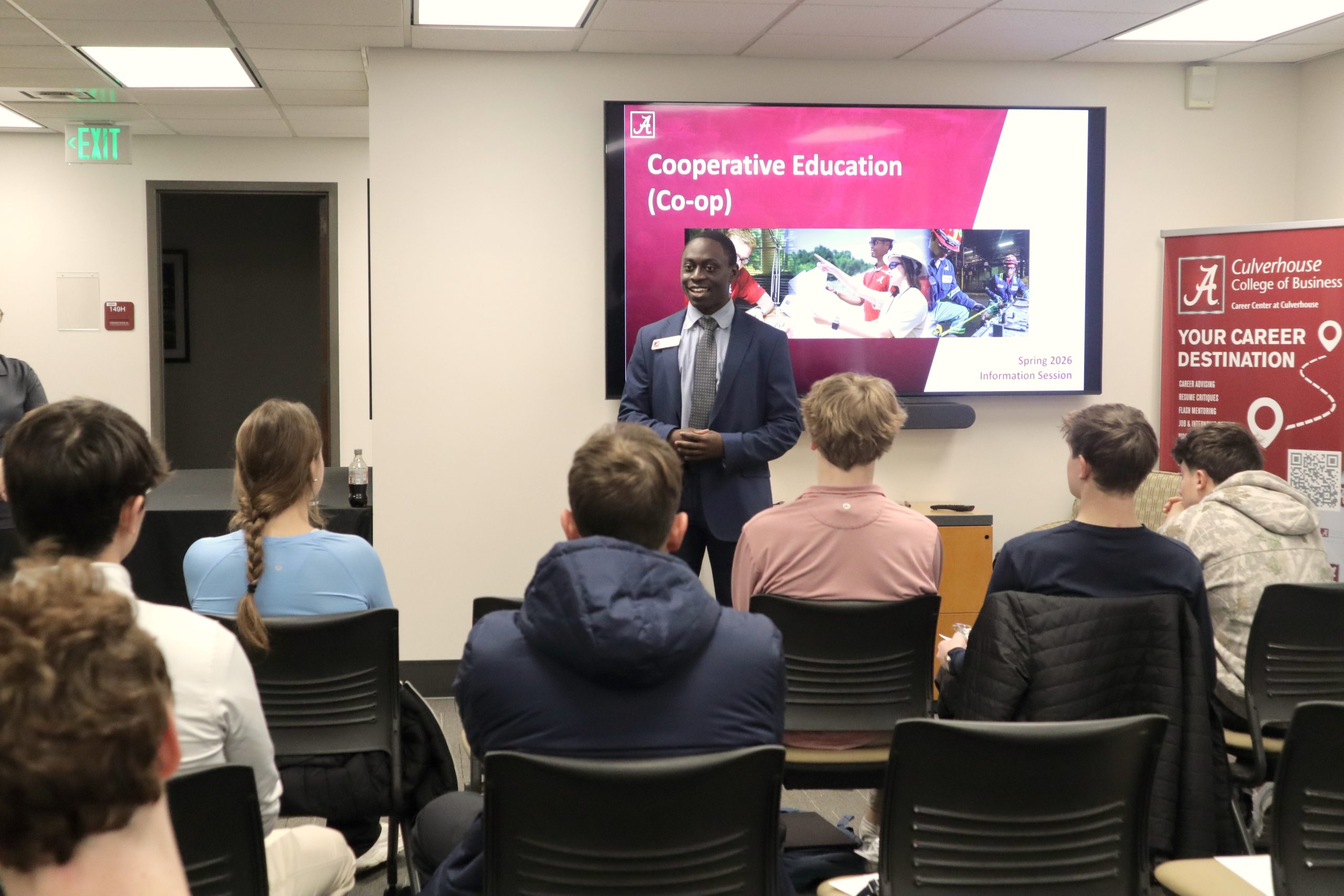
Those coaching sessions, which now take place in a dedicated space in Bidgood Hall’s newly renovated Gateway to Business Leadership, include both group and one-on-one interactions. The reasons a student seeks coaching vary. According to Keith Norton, one of the LEAD coaches, those reasons include being overwhelmed by the interviewing and hiring process, needing help resolving conflicts with a team or boss, or working through how to translate coursework or part-time job experience into a resume fit for post-graduation jobs.
In other words, LEAD coaches help students develop strategies for the everyday challenges that just about everyone reckons with at some point in their journeys through life.
Norton has seen the power of coaching in the thousands of interactions he’s had over the years.
“One student wrote to me at the end of the semester to say that what stayed with her wasn’t a single lesson, but the way the class connected real choices to who she wanted to become. She said the career fair prep, the guest speakers who didn’t sugarcoat their paths, and the moments where I’d pause to share my own experience made the future feel less intimidating,” he said.
“She left with more confidence and clarity about herself, not just a better resume.”

Charles Makobongo, a recent graduate of Culverhouse with degrees in finance and accounting who is now earning a Master of Accountancy from Culverhouse’s Manderson Graduate School of Business, speaks about the power of the program: “Kelly LEAD taught me that professional development isn’t just about having strong technical skills. How you communicate, build relationships, collaborate with others, and carry yourself can have just as much of an impact.
“Looking back, I think one of the biggest benefits of Kelly LEAD was that it helped me become more comfortable putting myself in situations where I had to communicate, lead, and represent something larger than myself. Those lessons have continued to benefit me throughout my internships and other professional and personal experiences.”
Norton eventually recruited Makobongo to become a coach himself, helping his fellow students figure out their way in the world.
“I’ll sometimes get a random email from a student I coached saying that they landed an internship they had been working toward or decided to change their major to something that better aligned with their goals.
“Those moments make the work feel worthwhile because you realize that something you said or did may have helped change the trajectory of another person’s life.”
Furthermore, going through Kelly LEAD has also been transformative in helping Makobongo understand himself:
“I think the biggest thing Kelly LEAD has given me is a greater sense of conviction about the kind of life and career I want to build. When I first came to Alabama as an out-of-state student, I didn’t have everything figured out. A lot of what I thought I wanted evolved as I was exposed to new people, experiences, and opportunities.
“Kelly LEAD was one of the formative environments that encouraged me to stop waiting until I had everything figured out and instead start putting myself in rooms, conversations, and situations where I could learn. I made decisions and made them the ‘right’ answer regardless of whether they actually were.
“The more I did that, the more evidence I had about what I was capable of and what I actually wanted.”