

When Josh Pierce steps into a classroom in Selma, he isn’t trying to turn teenagers into day traders. He’s trying to give them something far more durable: a new way to think about money.
Pierce, a Professor of Finance and Associate Department Head at Culverhouse, helped lead BUILD UP — a financial literacy initiative through the nonprofit organization Foot Soldiers Park in Selma. The program is designed to expose Selma-area high school students to the fundamentals of personal finance and investing.
Pierce was introduced to the program after he received a message from Culverhouse’s Preston McGee, Community Outreach Coordinator for the Selma Resilience Initiative. McGee told him about an effort forming in Selma and Dallas County and asked whether he might want to get involved. Pierce saw immediate potential.
Within months, he was working alongside local organizers to shape what became a three-week pilot course at Selma High School. Over several weeks, Pierce and his colleagues covered everyday financial decisions, like how checking accounts work, what happens when car loans stretch too long, how compound interest grows savings or debt, and how to read a credit card statement. He calls it “bread and butter finance,” the kind of knowledge that quietly shapes people’s lives.
What surprised him was how quickly students gravitated toward investing.
Many already recognized company names and cryptocurrencies from social media and phone apps. Pierce noticed that for some teenagers, stock trading and online betting blurred together.
Rather than pitching hot tips, Pierce emphasized the slow, research-driven approach he teaches in introductory finance courses: risk and return, diversification, mutual funds, and fees. “I want them to see that buying stocks is not a game,” he said, “and not a shortcut to instant wealth.”
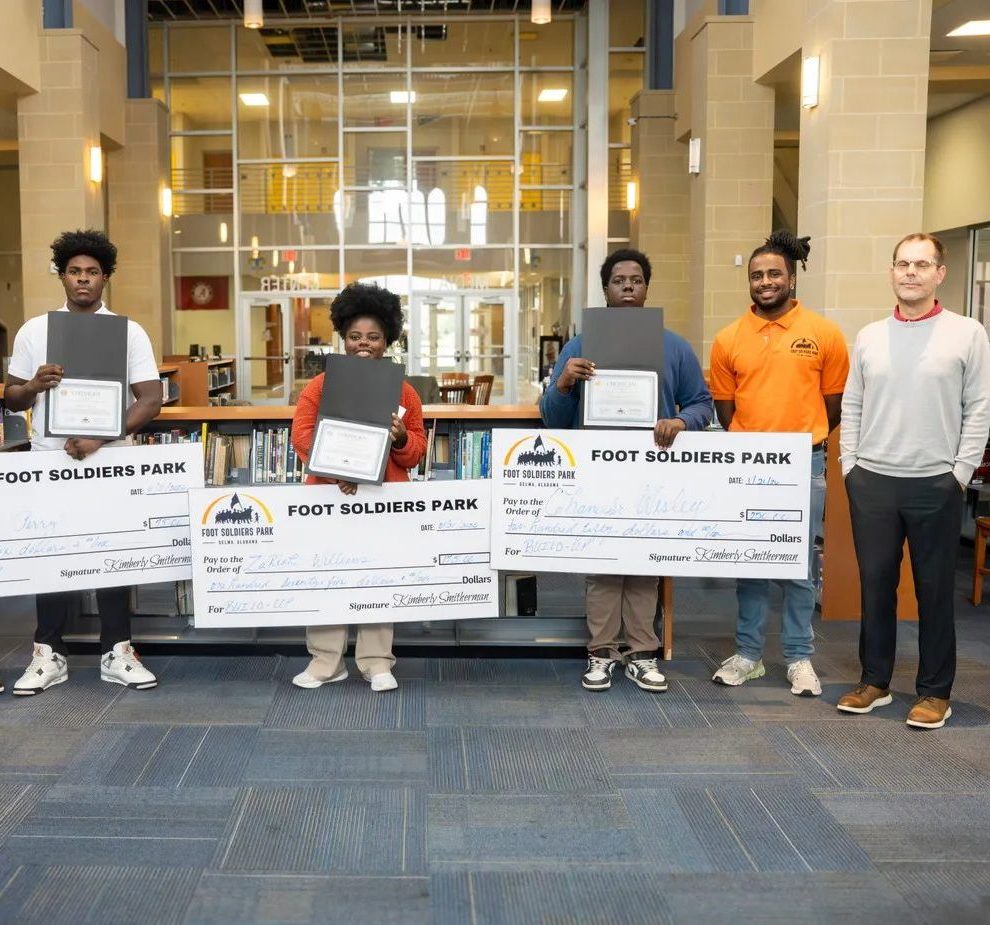
To make the lessons stick, students got hands-on learning. They were given mock portfolios with roughly $100,000 in simulated money and asked to analyze companies, evaluate volatility, and build balanced holdings. At the end of the program, the top performers were recognized during a small graduation ceremony attended by families and community members.
The program’s success fueled bigger ambitions. The pilot ran in four classrooms of about 25 to 30 students each, but Pierce is already working with partners to expand deeper into Selma High and outward into the broader community. Plans include workshops for parents and local business owners with sessions that explain bank loans, financial statements, cash flow, and weighing capital investments. The deeper mission of these programs is to change how people relate to money itself.
“The goal is to change their relationship with money,” Pierce said, shifting the mindset from something fleeting or intimidating into a tool for stability, planning, and generational growth.
Pierce breaks concepts down to principles, explaining that stock, shares, and equity are basically the same thing, that mutual funds are collections of companies, that diversification simply means spreading risk.
By the end of the three weeks, Pierce wants students to leave with confidence, something more valuable than market predictions. He wants them to feel comfortable asking questions about savings accounts, retirement plans or student loans, and skeptical of promises that sound too good to be true.
Getting those ideas in front of teenagers matters, Pierce said, because habits form early.
“It’s good that we can get them in high school so they can have that foundation,” he said.